
Our food and agro-allied products are marketed under our brand, “Chokipu Foods & Agro-Allied,” a subsidiary of Minepointe Limited.
Food Products
We produce food products such as, flour, starch, cereals, snacks, and seasoning from cassava, cereal grains, yams, cocoyams, sweet potatoes, plantains, and onions.
To support the drive for local content, our food products are wholly sourced from Nigeria. Additionally, our food products are naturally gluten-free, making them an excellent choice for people who have celiac disease or follow a gluten-free diet.
Cassava Flour
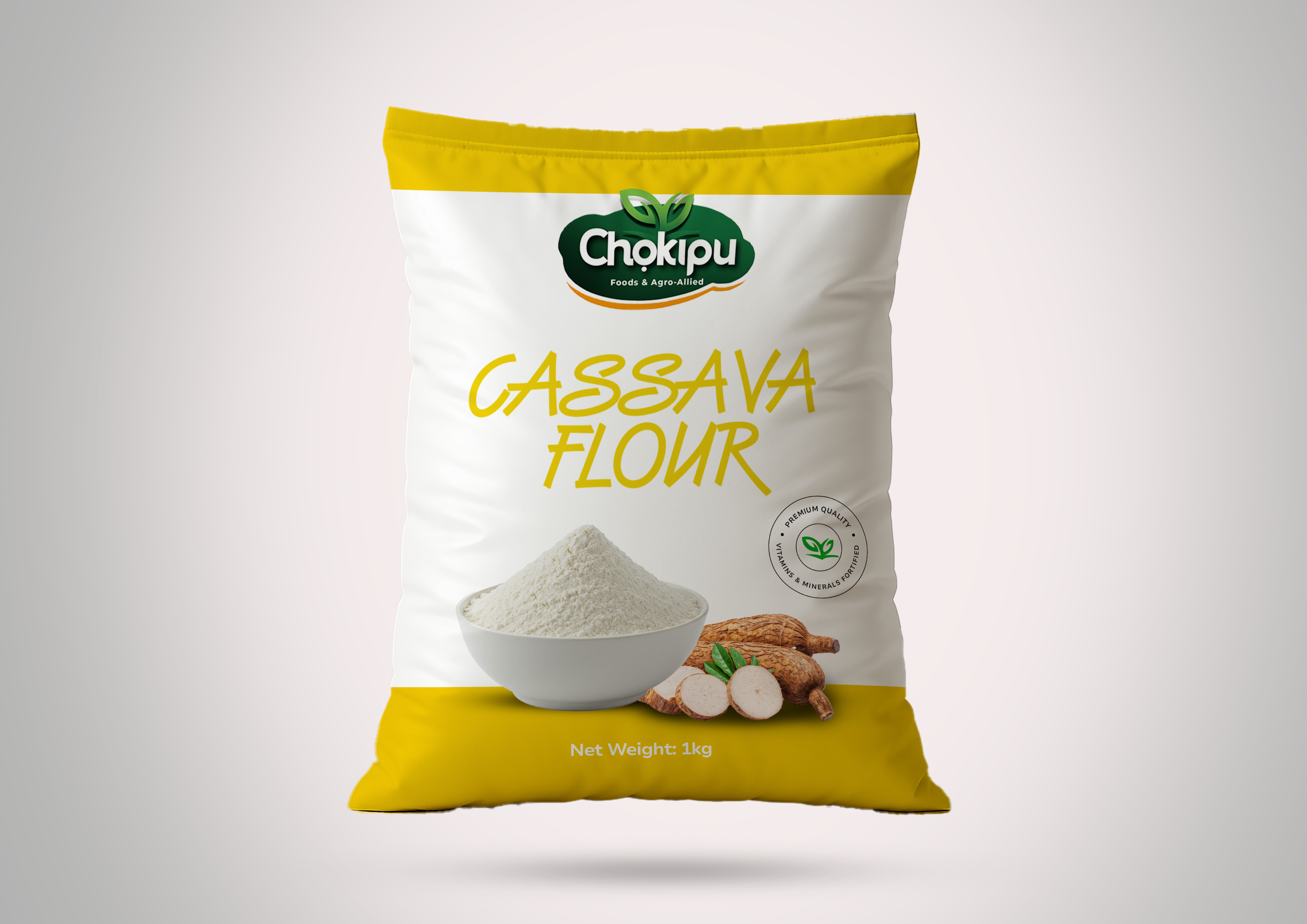
Cassava flour is made from ground cassava root tubers (Manihot esculenta). It is white in colour, smooth in texture, and neutral in taste.
Cassava flour has many uses. It can be used for baking, to make dough products, to serve as thickener or filling, and to make a white dough-like meal, referred to as Lafun by the Yorubas of Nigeria. Lafun is eaten with soup. In terms of taste, texture, and shelf life, cassava flour is considered to be a good gluten-free alternative to wheat flour in baking and cooking.
Cassava flour possesses multiple benefits in terms of nutrition. It is a rich source of vitamin C and carbohydrates (especially resistant starch). It also contains essential B vitamins, and minerals such as, magnesium, potassium, manganese, and copper.
Cassava Starch
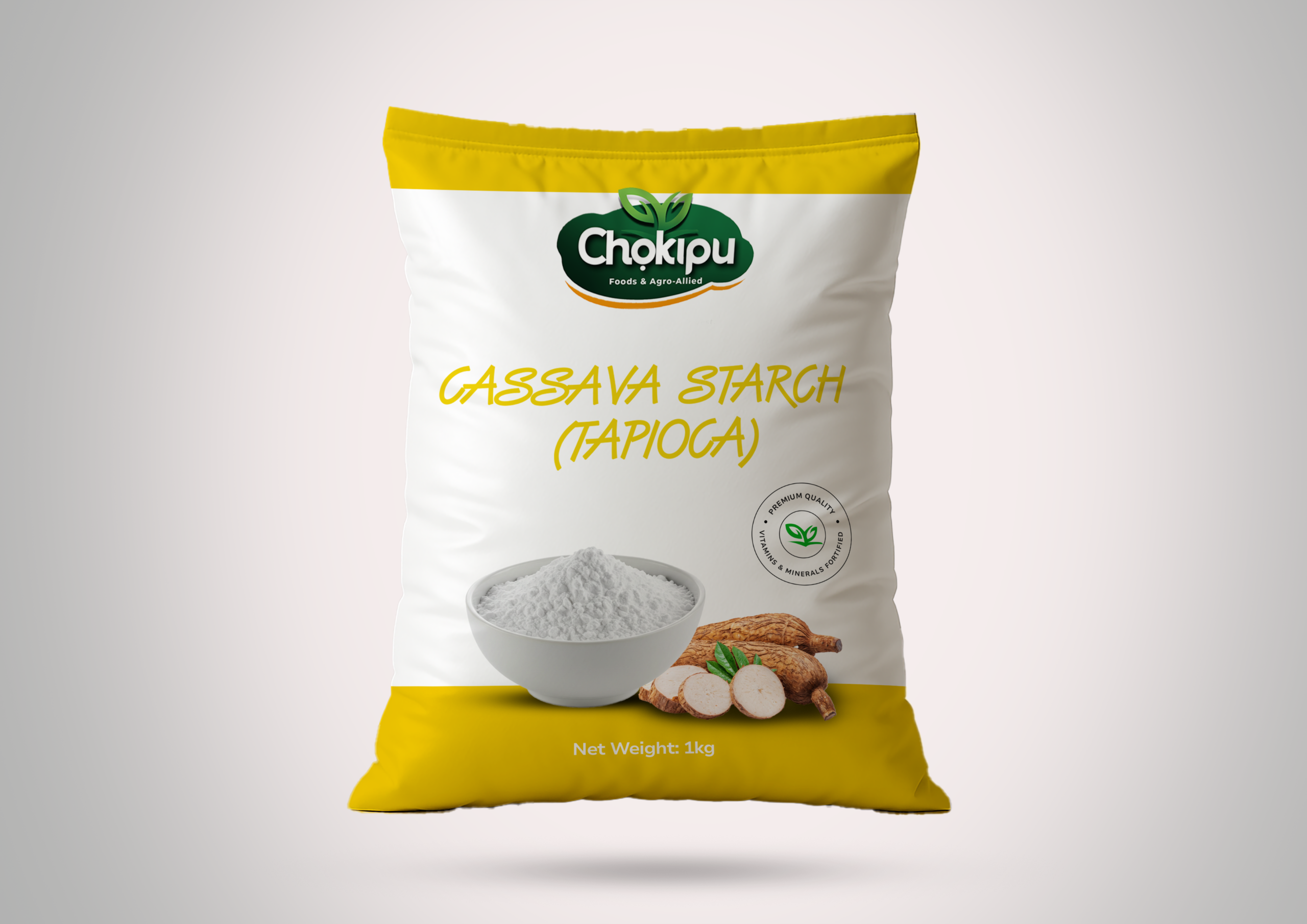
Cassava starch is extracted from the cassava root tuber. It is pure white in colour, smooth in texture, and neutral in taste and smell. Tapioca is sometimes used interchangeably with cassava starch.
Cassava starch has many uses in food processing and industry. It can be used for baking, to make dough products, to serve as thickener or filling, to manufacture citric acid, to serve as sweetener (when converted to glucose syrup), to serve as food additive in order to control consistency and texture and extend shelf life, and to make a white starchy dough-like meal, referred to as Fufu by the Yorubas of Nigeria. Fufu is eaten with soup. Cassava starch is used in the textile industry in operations such as, warp sizing, cloth finishing, and printing. It can be used to press clothes to get the perfect crease. It is used as a fermentable starch source in breweries and distilleries, as an integral input in the paper and adhesive industries, as a binder in pharmaceutical tablets and natural paints, and as an essential component of skin and hair products in the cosmetics industry. It is also used in the production of ethanol, a bio-fuel that is ecologically friendly.
With respect to nutrition, cassava starch contains mostly carbohydrates, however, it is naturally gluten-free, so it can serve as a wheat substitute in baking and cooking for people on a gluten-free diet.
Tapioca Flakes
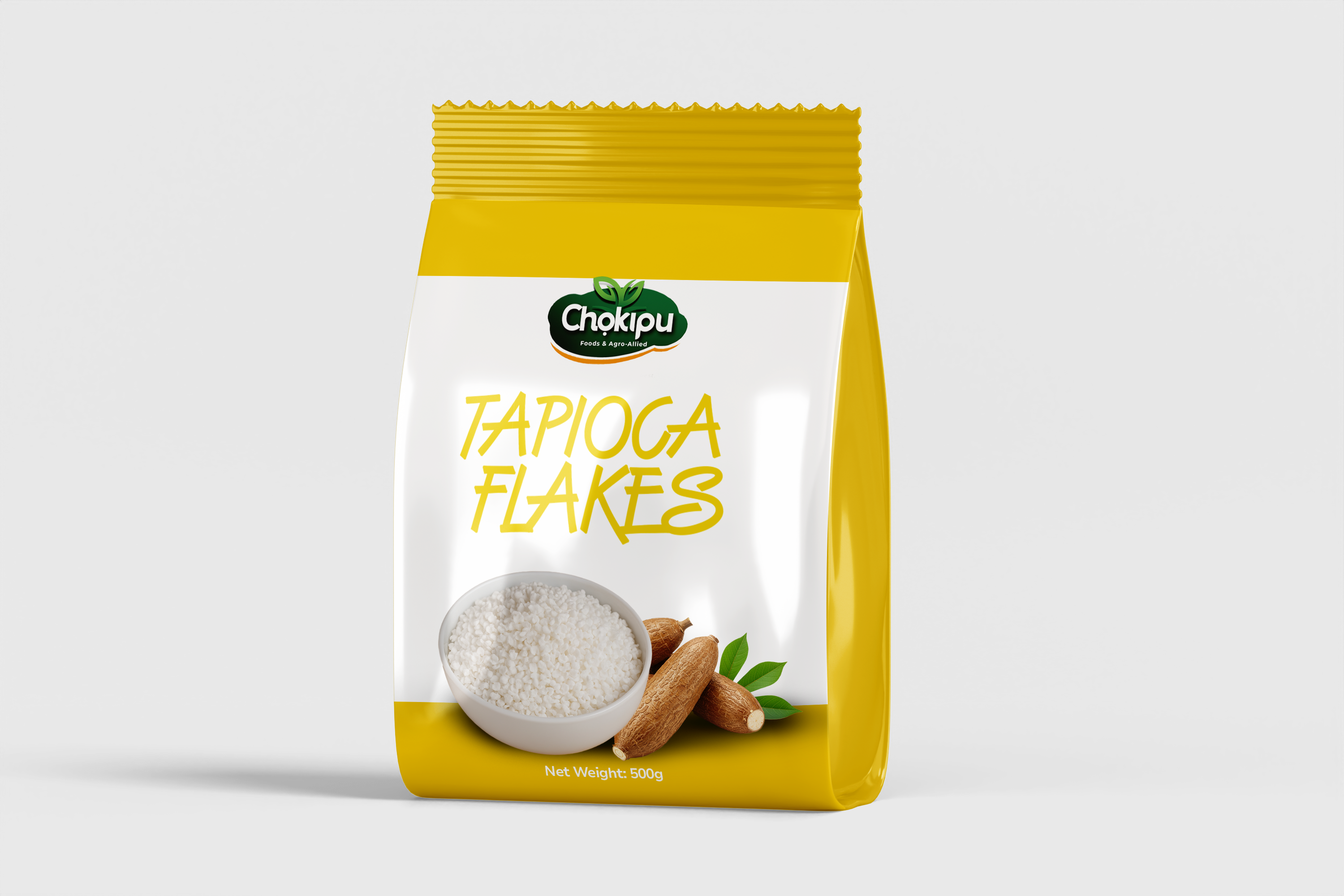
Tapioca flakes is a porridge made from cassava starch. Referred to as Mingau de Tapioca by the Tupis of Brazil, it is served as a breakfast or dinner meal, and as a dessert. Nutritionally, it is a good source of energy carbohydrates.
Cassava Chips
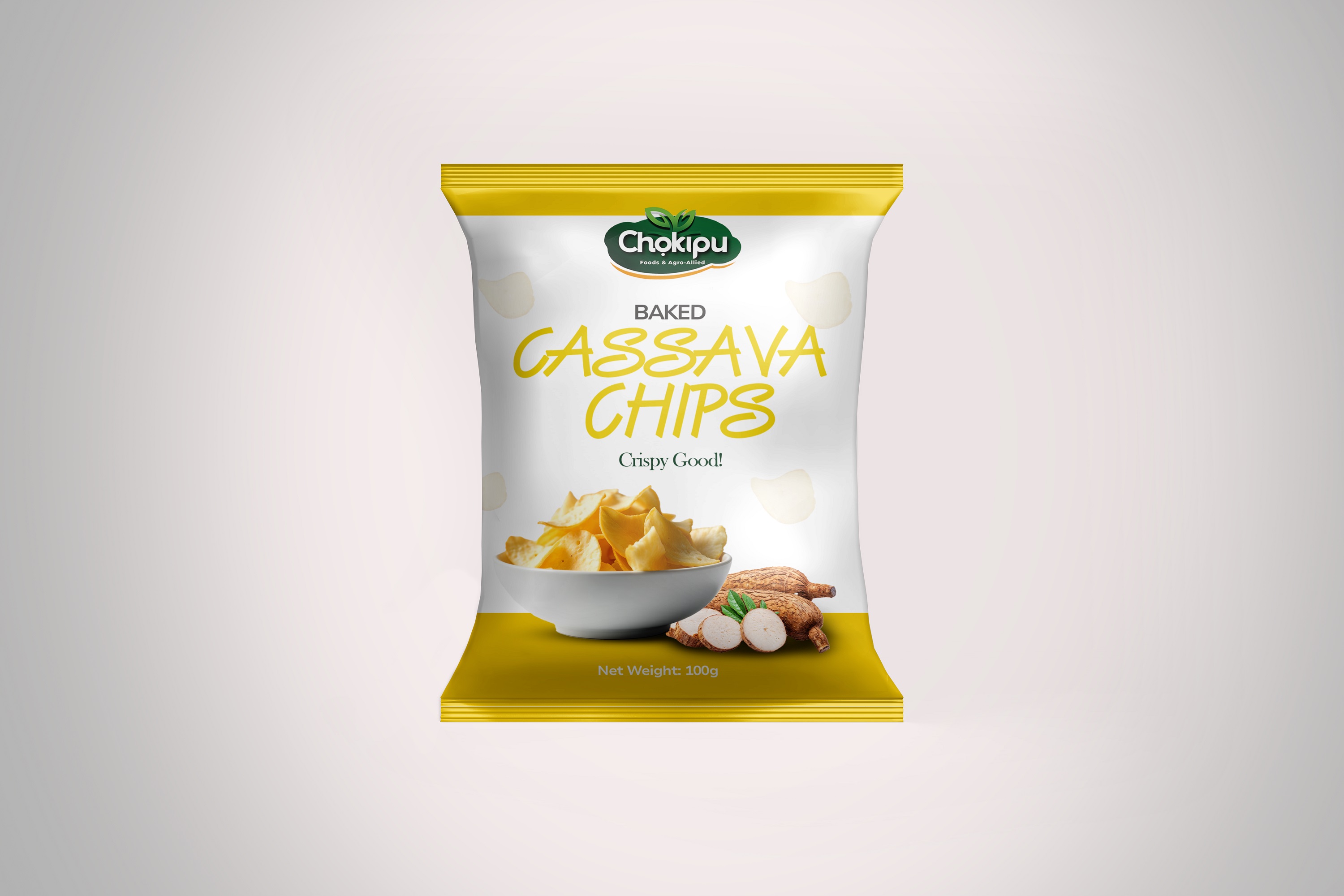
Cassava chips are a snack made from thinly sliced cassava roots that are deep-fried or baked till crispy and golden. As a healthier alternative to deep frying, we bake our chips. Cassava chips snack is a rich source of vitamin C and carbohydrates. It also contains essential B vitamins and minerals.
Guinea Corn Flour
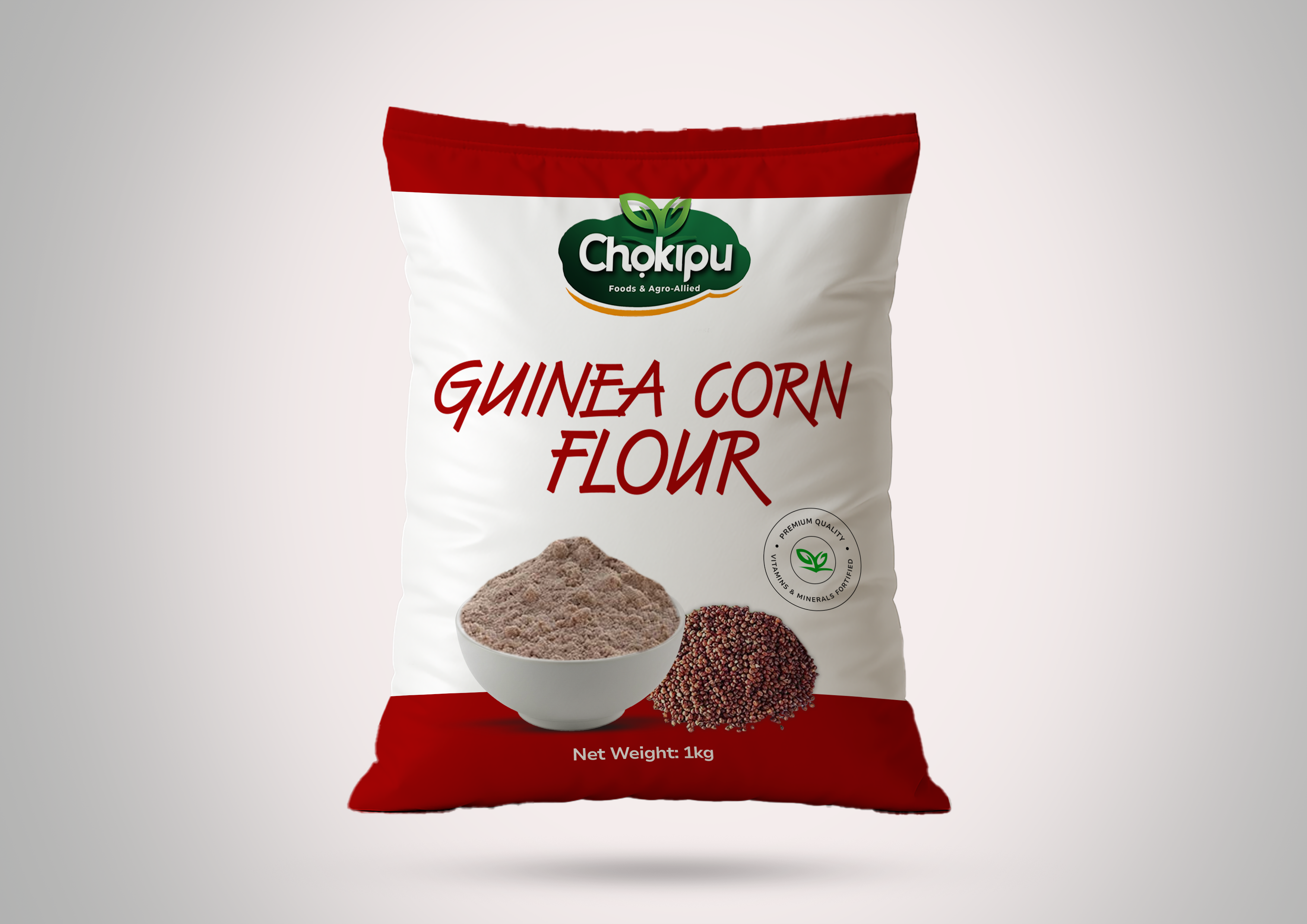
Guinea corn flour is made from ground whole guinea corn grains (Sorghum bicolor). It is pinkish-brown in colour, with a smooth texture and a mildly sweet, nutty flavour.
Guinea corn flour has several uses in food processing and industry. It can be used for baking, to make dough products, to serve as thickener or filling, and to make alcoholic and non-alcoholic beverages. It can be converted to syrup, and used as sweetener, or as medicine in the pharmaceuticals. When malted in to a thick syrup, guinea corn flour can replace liquid sweeteners such as, corn and maple. It can be used to produce an adhesive that is used in the manufacture of plywood. Guinea corn flour can also be made in to a brown dough-like meal, referred to as Tuwo Dawa by the Housas of Nigeria. Tuwo Dawa is eaten with soup. To increase the stretchy feel of the dough-meal, cassava flour may be mixed with the guinea corn flour before cooking. Guinea corn flour has a fluffy texture that may not make it wholly substitutable for wheat flour in all cases. For best results, pair with a starchy flour like tapioca to improve elasticity and millet flour to counteract grittiness.
Guinea corn flour like all other ancient grain-flour has numerous nutritional benefits. It is rich in carbohydrates, fats and oils, and crude fiber and ash. It is a good source of proteins, vitamins such as, B-complex, A, D, E, and K, and minerals like, magnesium, calcium, copper, iron, potassium, phosphorus, selenium, and zinc. Antioxidants such as, phenolic compounds are also abundant in guinea corn flour.
Guinea Corn Flakes
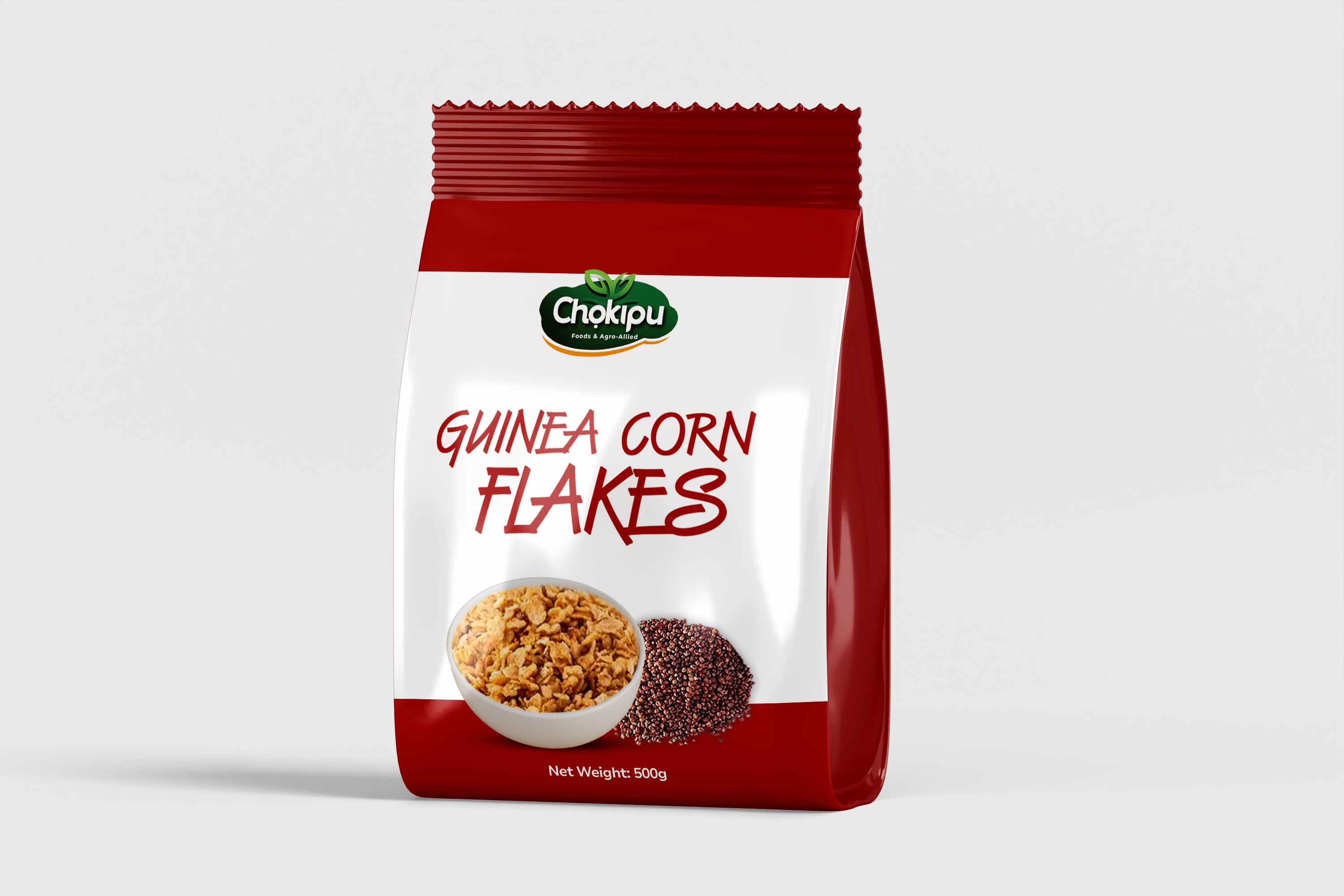
Guinea corn flakes is made from whole guinea corn grains. It can be consumed as a cereal, or used as an ingredient in making snacks, dough products, granola, and nutritional bars. It is a good source of energy carbohydrates, proteins, crude fiber and ash, micronutrients, and antioxidants.
Pearl Millet Flour
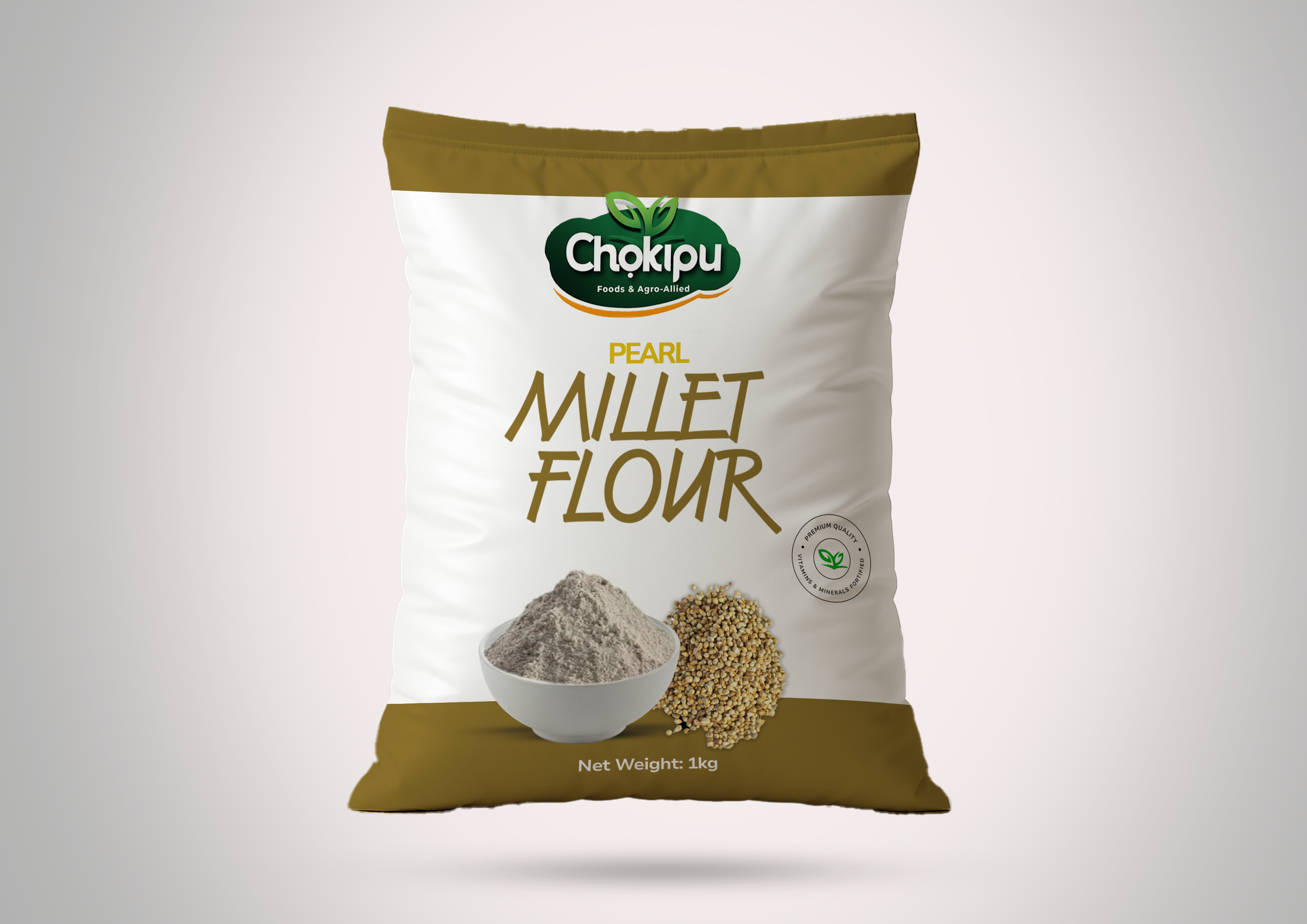
Pearl millet flour is made from ground whole pearl millet grains (Pennisetum glaucum). The flour has a greige (or beige-gray) colour, a soft, smooth texture, and a mildly sweet, nutty flavour that has a slightly bitter after taste.
Pearl millet flour is extremely versatile in terms of use. It can be used for baking, to make dough products, to serve as thickener or filling, and to make alcoholic and non-alcoholic (including non-dairy probiotic) beverages. It can be made in to a light brown dough-like meal, referred to as Tuwo Gero by the Hausas of Nigeria. Tuwo Gero is eaten with soup. To increase the stretchy feel of the dough-meal, cassava flour may be mixed with the pearl millet flour before cooking. Depending on the recipe, pearl millet flour can be utilized on its own, or combined with other gluten-free flours. Mixing with other mildly sweet and neutral flours like, sorghum and tapioca flours neutralizes the bitter taste, improves elasticity, and projects pearl millet’s other flavour notes – buttery and grassy.
Pearl Millet flour like all other ancient grain-flour has numerous nutritional benefits. It is rich in carbohydrates, crude fiber and ash, and several fats and oils including, the fatty acid, linoleic acid, and unsaturated oil, omega-6. It is a good source of proteins, vitamins such as, B-complex, A, and E, and essential minerals like, magnesium, calcium, sodium, manganese, copper, iron, zinc, potassium, and phosphorous. Antioxidants such as, phenolic compounds and carotenoids are also abundant in pearl millet flour.
Pearl Millet Flakes
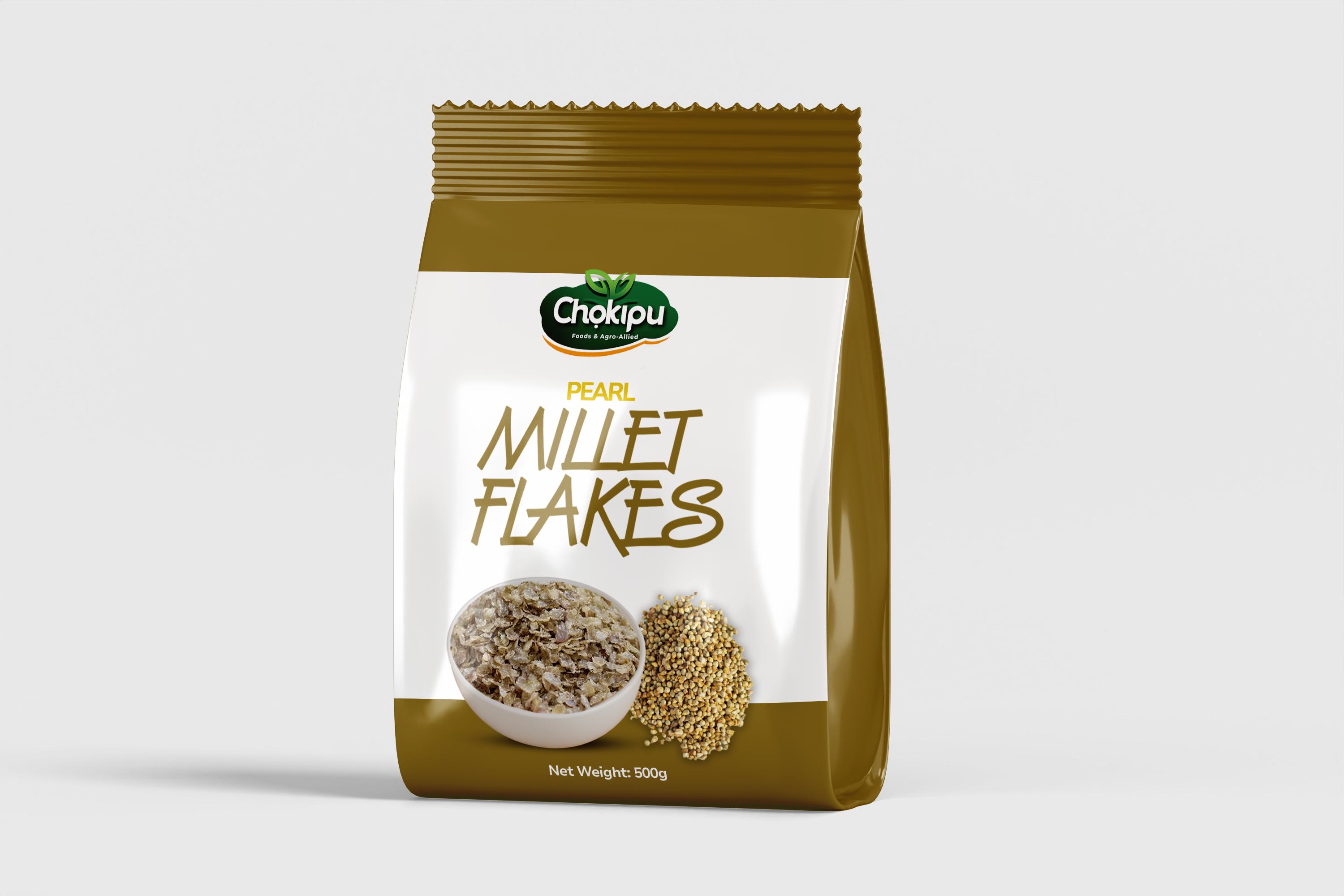
Pearl millet flakes is made from whole pearl millet grains. It can be consumed as a cereal, or used as an ingredient in making snacks, dough products, granola, and nutritional bars. It is a good source of energy carbohydrates, proteins, crude fiber and ash, micronutrients, and antioxidants.
White Water Yam Flour
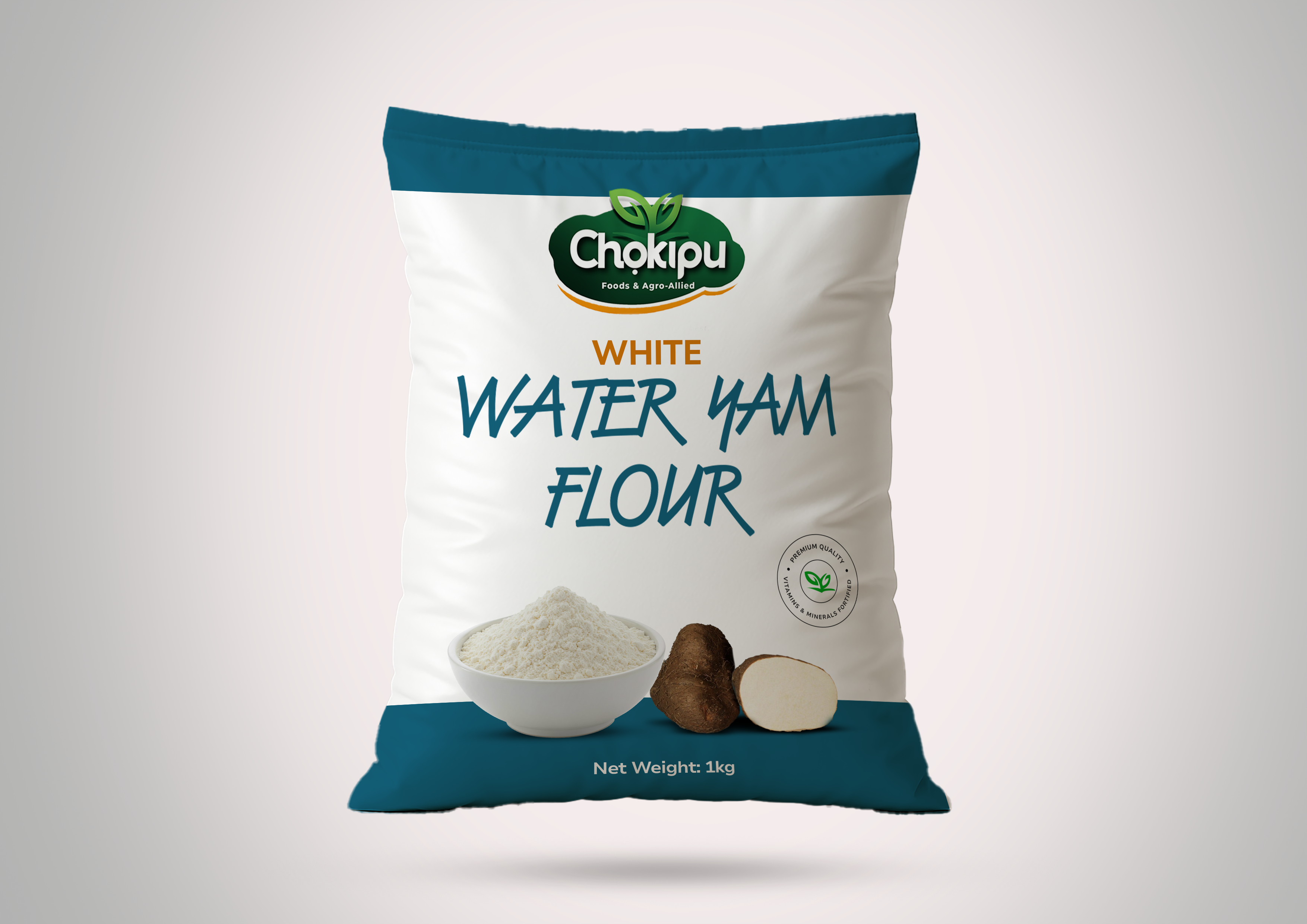
Yam flour, referred to as Elubo Isu by the Yorubas of Nigeria can be made from any of the various cultivars of yam grown for consumption. It could be fermented (brown) yam flour, or unfermented (white) yam flour. White water yam flour is made from ground unfermented water yam stem tubers (Dioscorea alata). The flour has a creamy-white colour, a smooth texture, and mixed flavours including, earthy, nutty, slightly smoky, and mildly sweet.
White water yam flour has many uses in the food and pharmaceutical industries. It can be used as binder and ingredient in baking, to make pasta dough, to serve as flavour for ice cream, and to serve as thickener or filling by adding body to soup, stew, sauce, and porridge. It can be used in a variety of recipes like water yam balls, referred to as Ojojo by the Yorubas of Nigeria, especially the Ijebus. It can also be used to make a creamy-white dough-like meal, referred to as Poundo Yam in Nigeria. Poundo Yam is eaten with soup. In the pharmaceutical industry, white water yam flour has antispasmodic, diaphoretic, expectorant, cardiotonic, and detergent uses. White water yam flour can be utilized as a wheat substitute, or in composite blends with other gluten-free flours.
White water yam flour is loaded with lots of nutrients. It is rich in complex carbohydrates like starches and dietary fibers. It is a good source of macro-minerals like potassium, calcium, phosphorus, magnesium, and sodium, and micro-minerals such as, iron, copper, manganese, and zinc. It contains essential vitamins like, A, B6, C, and E. It also contains anti-oxidants such as, phenolic compounds, carotenoids, terpenoids, and diosgenin.
Cocoyam Flour
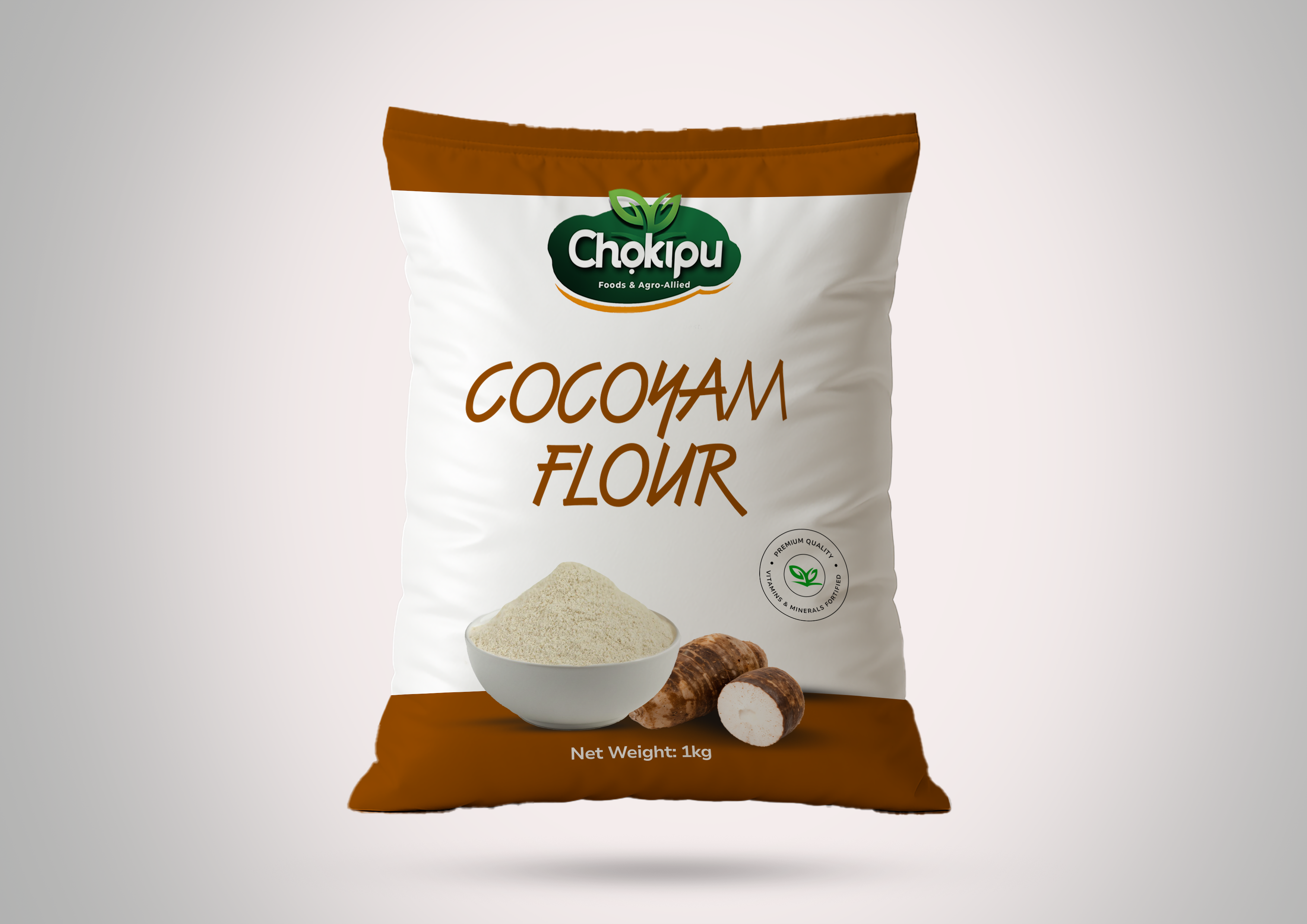
Cocoyam flour is made from ground cocoyam root tubers (Xanthosoma sagittifolium). The flour has a creamy-white colour, a gritty texture, and a mildly sweet, earthy flavour that has a slightly nutty undertone.
Cocoyam flour has many uses in food processing and industry. It can be used as binder and ingredient in baking, to make pasta dough, to serve as cereal base, to serve as adjuncts in non-alcoholic beverages, to serve as flavour for ice cream, and to serve as thickener or filling by adding body to soup, stew, sauce, and porridge. It can be used in a variety of recipes like cocoyam balls. Due to its high nutritional content and digestibility, it is used as ingredient in the manufacture of processed baby foods. Cocoyam flour is also used to make a light brown dough-like meal, wrapped in local banana leaves, referred to as Ebiripo by the Yorubas of Nigeria, especially the Ijebus. Ebiripo can be eaten with soup or stew. Cocoyam flour is relatively high in starch content, which facilitates its exploitation as industrial raw material in general purpose industries (including breweries and distilleries), and as a renewable energy source. It is highly sought after as a substitute for cassava and sweet potato flour.
Cocoyam flour is endowed with numerous nutritional benefits. It is high in complex carbohydrates (starches and dietary fibers). It is a good source of macro-minerals like potassium, phosphorus, calcium, magnesium, and sodium, and micro-minerals such as, iron, copper, manganese, and zinc. It is also a good source of phytonutrients (e.g., polyphenols, flavonoids, and carotenoids) that have anti-oxidant properties.
Cocoyam Chips
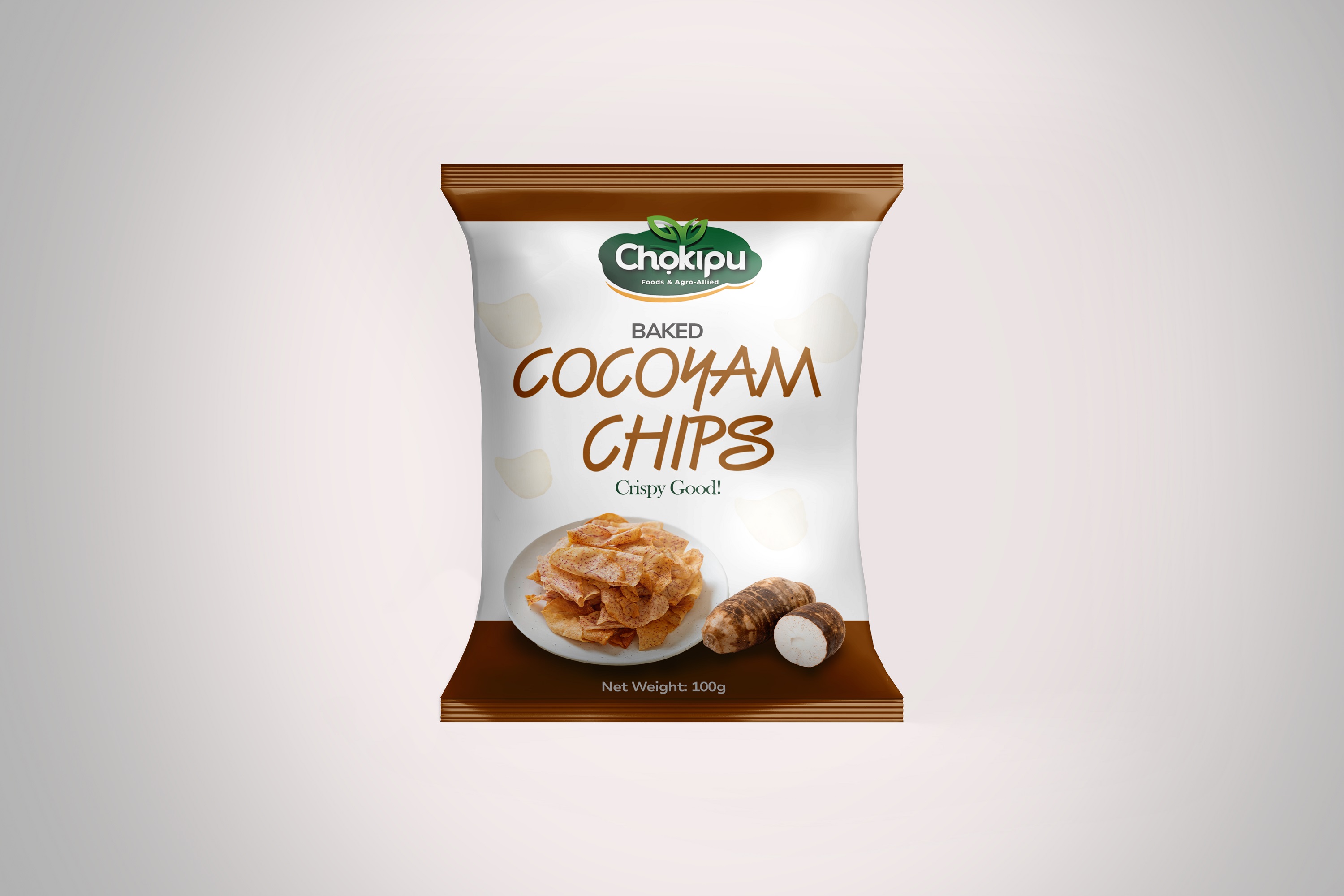
Cocoyam chips are a snack made from thinly sliced cocoyam roots that are deep-fried or baked till crispy and golden. As a healthier alternative to deep frying, we bake our chips. Cocoyam chips snack is rich in complex carbohydrates. It is also a good source of micronutrients and phytonutrients with antioxidant properties.
Orange-Fleshed Sweet Potato Flour
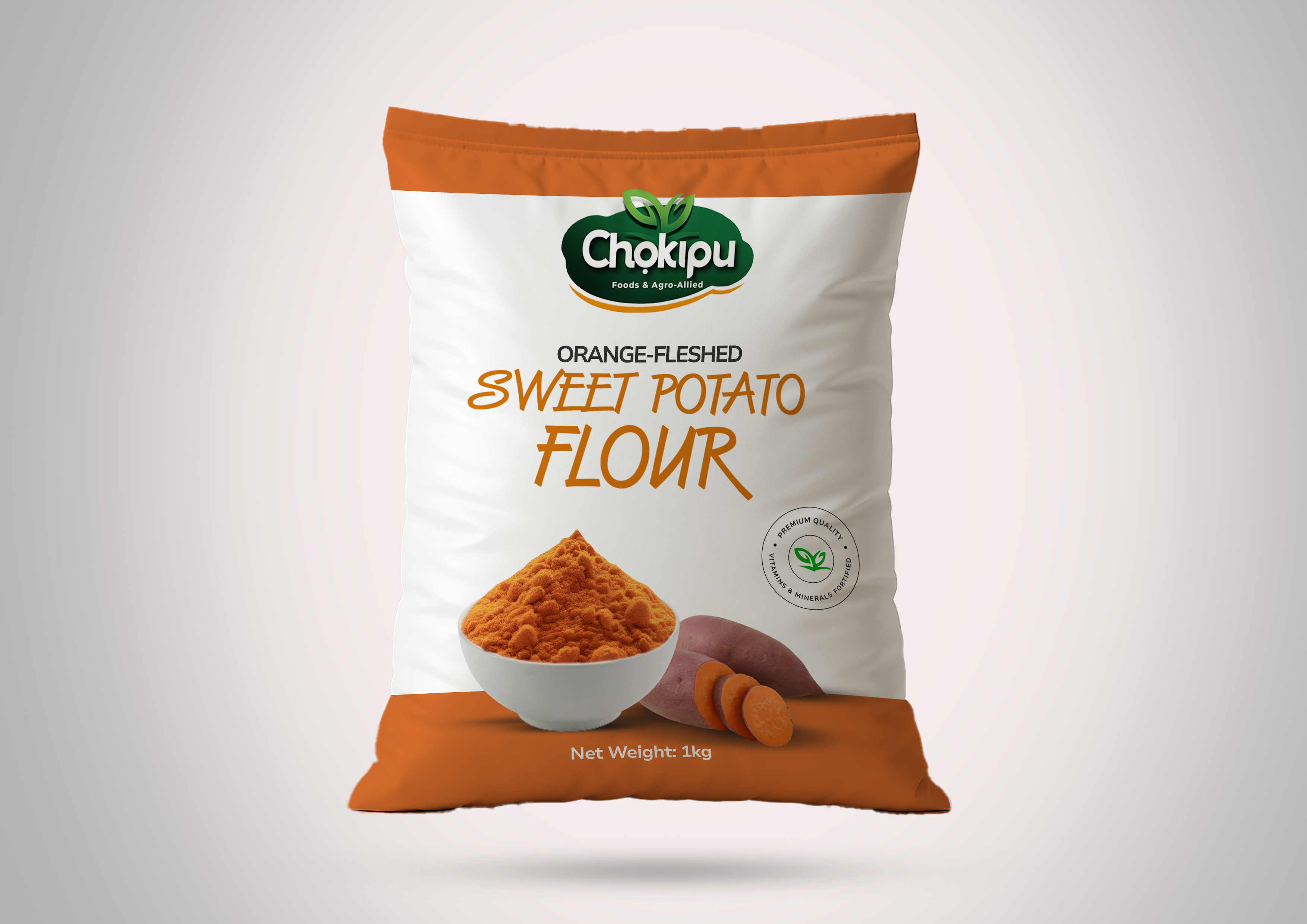
Orange-fleshed sweet potato flour is made from ground orange-fleshed sweet potato root tubers (Ipomoea batatas). The flour has an orange colour, a smooth, powdery texture, and a sweet, earthy flavour that has a slightly nutty undertone.
Orange-fleshed sweet potato flour has many uses. It can be used for baking, to make dough products, to serve as breading/coating for food products, to serve as adjuncts in non-alcoholic beverages (including smoothies), to serve as a natural colourant in food processing, to serve as flavour and stabilizer in the ice cream industry, to serve as gelling agent or binder in the food and pharmaceutical industries, and to serve as thickener or filling by adding body to soup, stew, sauce, gravy, porridge, etc. It can be used to make vinegar, or converted to syrup and used as sweetener. Due to its high nutritional content, it is used as ingredient in the manufacture of processed baby foods. It can also be used to make instant mashed potatoes, and an orange-brown dough-like meal, referred to as sweet potato swallow. Sweet potato swallow can be eaten with soup or stew. To increase the stretchy feel of the dough-meal, unripe plantain flour may be mixed with the orange-fleshed sweet potato flour before cooking. Orange-fleshed sweet potato flour is a good alternative to wheat flour in baking and cooking; however, it may not be wholly substitutable in recipes that require the dough to rise, as it doesn’t contain gluten.
Orange-fleshed sweet potato flour is an important source of nutrients. It is high in complex carbohydrates (starches and dietary fibers). It is a good source of minerals like potassium, magnesium, calcium, phosphorus, zinc, iron, manganese, and copper, and vitamins such as, B complex, C, E, and provitamin A. It is also rich in antioxidants such as, polyphenols, phenolic compounds, beta-carotene and other carotenoids.
Orange-Fleshed Sweet Potato Chips
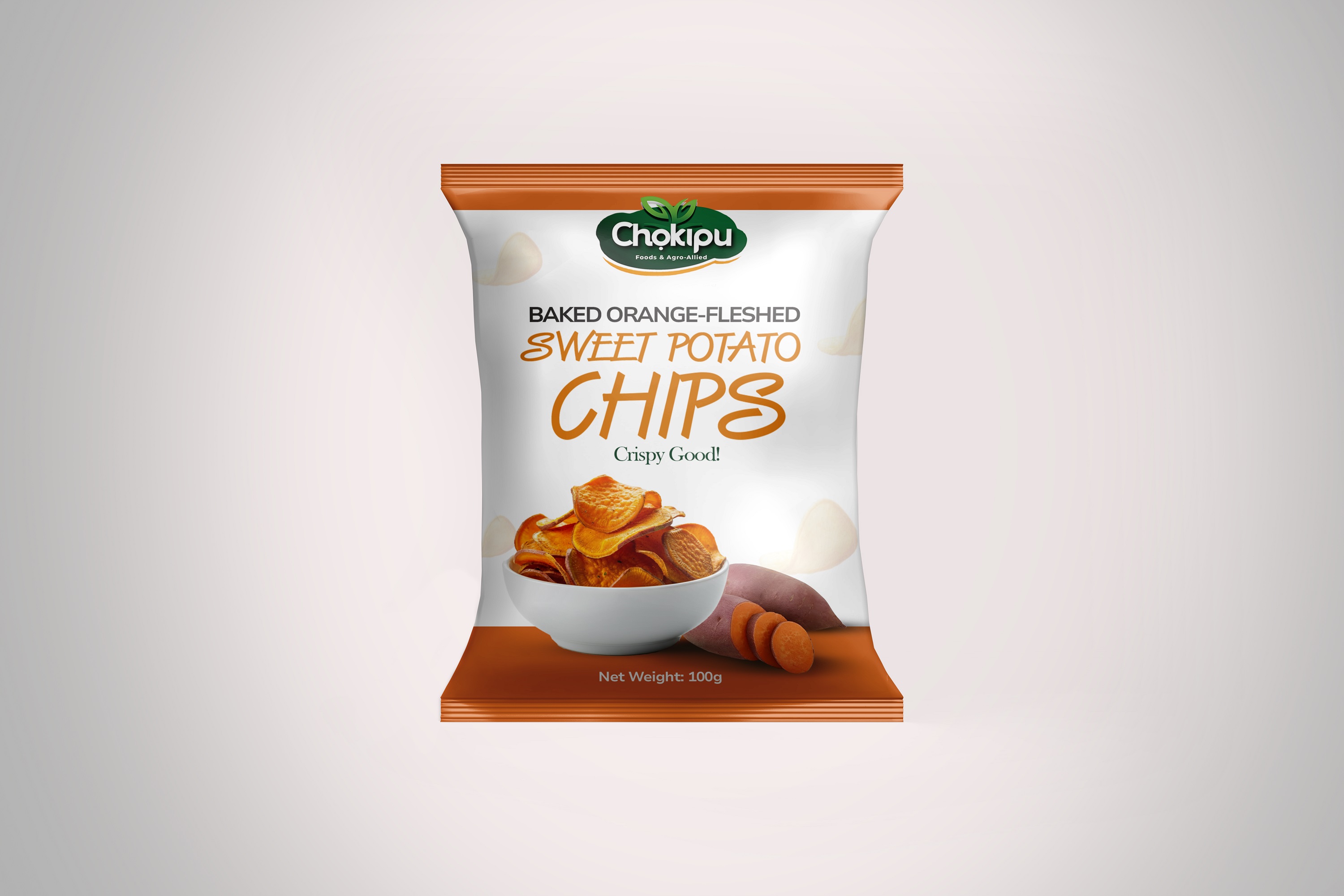
Orange-fleshed sweet potato chips are a snack made from thinly sliced orange-fleshed sweet potato roots that are deep-fried or baked till crispy and golden. As a healthier alternative to deep frying, we bake our chips. Orange-fleshed sweet potato chips snack is rich in complex carbohydrates and anti-oxidants. It is also a good source of micronutrients.
Unripe Plantain Flour
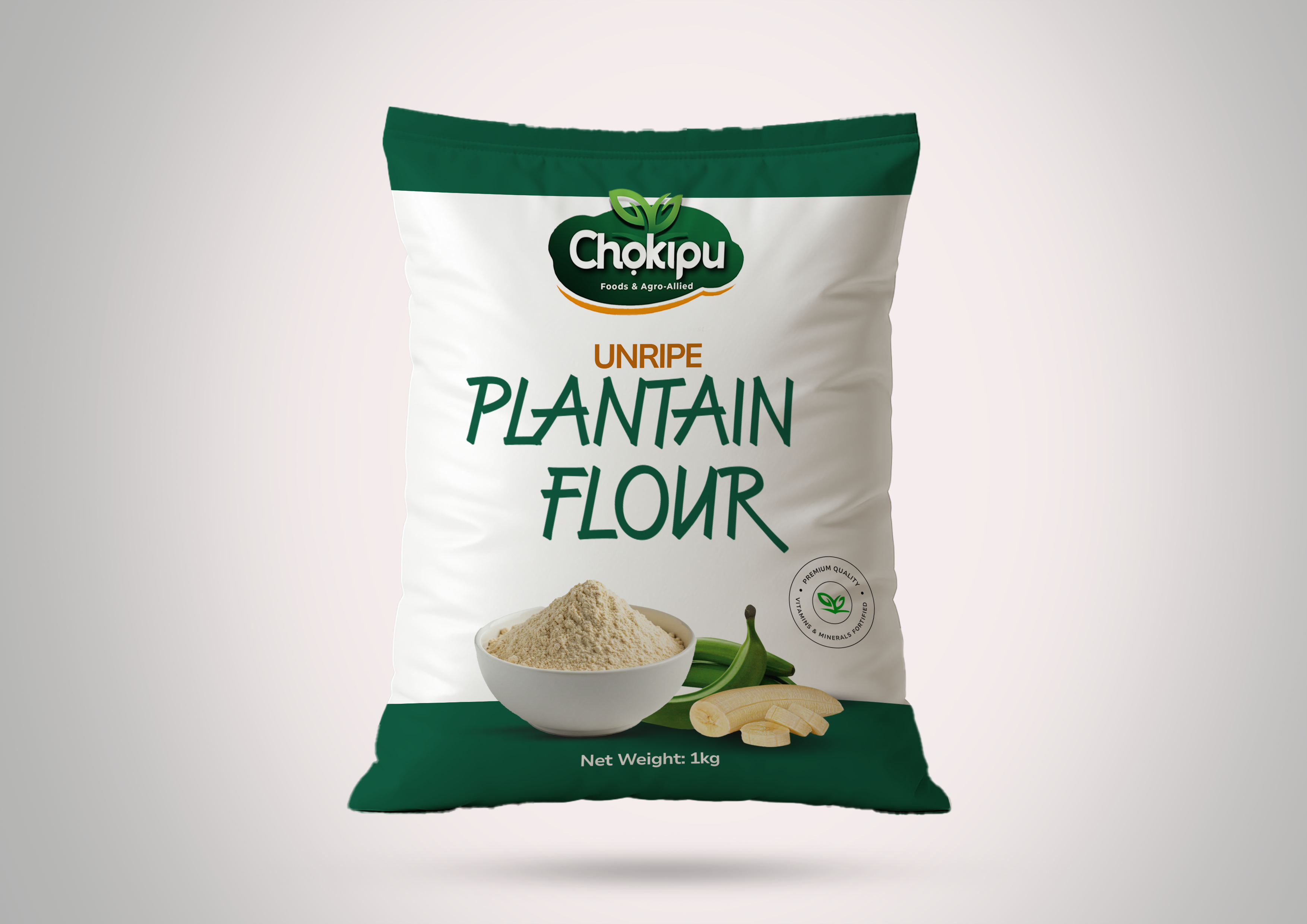
Unripe plantain flour is made from ground green, unripe plantain fruits (Musa x paradisiaca). The powder has a light yellow colour, a smooth texture, and a flavour that is almost neutral.
Unripe plantain flour is an extremely versatile flour that can be used in a variety of dishes, from sweet to savory. It can be used for baking, to make dough products, to serve as thickener or filling, to serve as flavouring, to make syrups and vinegar, and to make alcoholic and non-alcoholic (including smoothie) beverages. It is a major ingredient in the production of soy-musa, which can serve as breakfast cereal and baby food. It can also be made in to a yellow dough-like meal, referred to as plantain swallow. Plantain swallow is eaten with soup.
Green plantain flour is highly sought after, because as a base for gluten-free products, it can be put to high commercial value in making: biscuits/cookies, cakes, muffins, brownies, bread, tortillas, bagels, pan cakes, waffles, pudding, puff-puff, doughnuts, pie crusts, chips, pasta, syrup, vinegar, roux and other sauces, etc. Green plantain flour has a flavour that is almost neutral, because it has a slightly nutty and slightly bitter taste. Although this bitter taste dissipates with use, combining it with other flours such as, cassava or sweet potato flour is palatable.
Unripe plantain flour is a low fat source of complex carbohydrates (starches and dietary fibers). It also contains proteins, several antioxidants, and good amounts of vitamins and minerals including, A, B6, C, and K, and iron, potassium, magnesium, phosphorus, and copper.
Unripe Plantain Chips
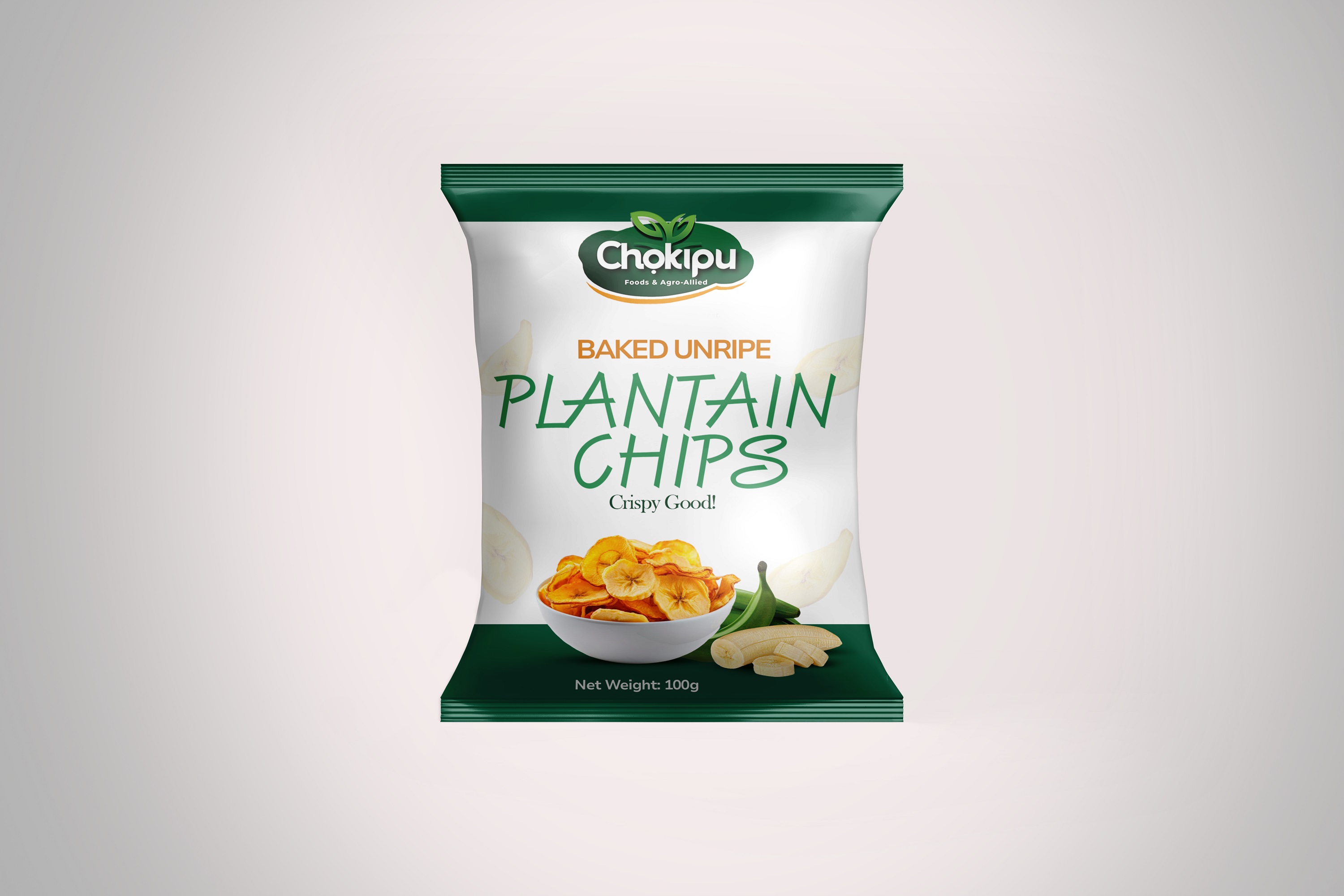
Unripe plantain chips are a snack made from thinly sliced green, unripe plantains that are deep-fried or baked till crispy and golden. As a healthier alternative to deep frying, we bake our chips. Unripe plantain chips snack is rich in complex carbohydrates and anti-oxidants. It is also a good source of proteins and micronutrients.
Red Onion Powder
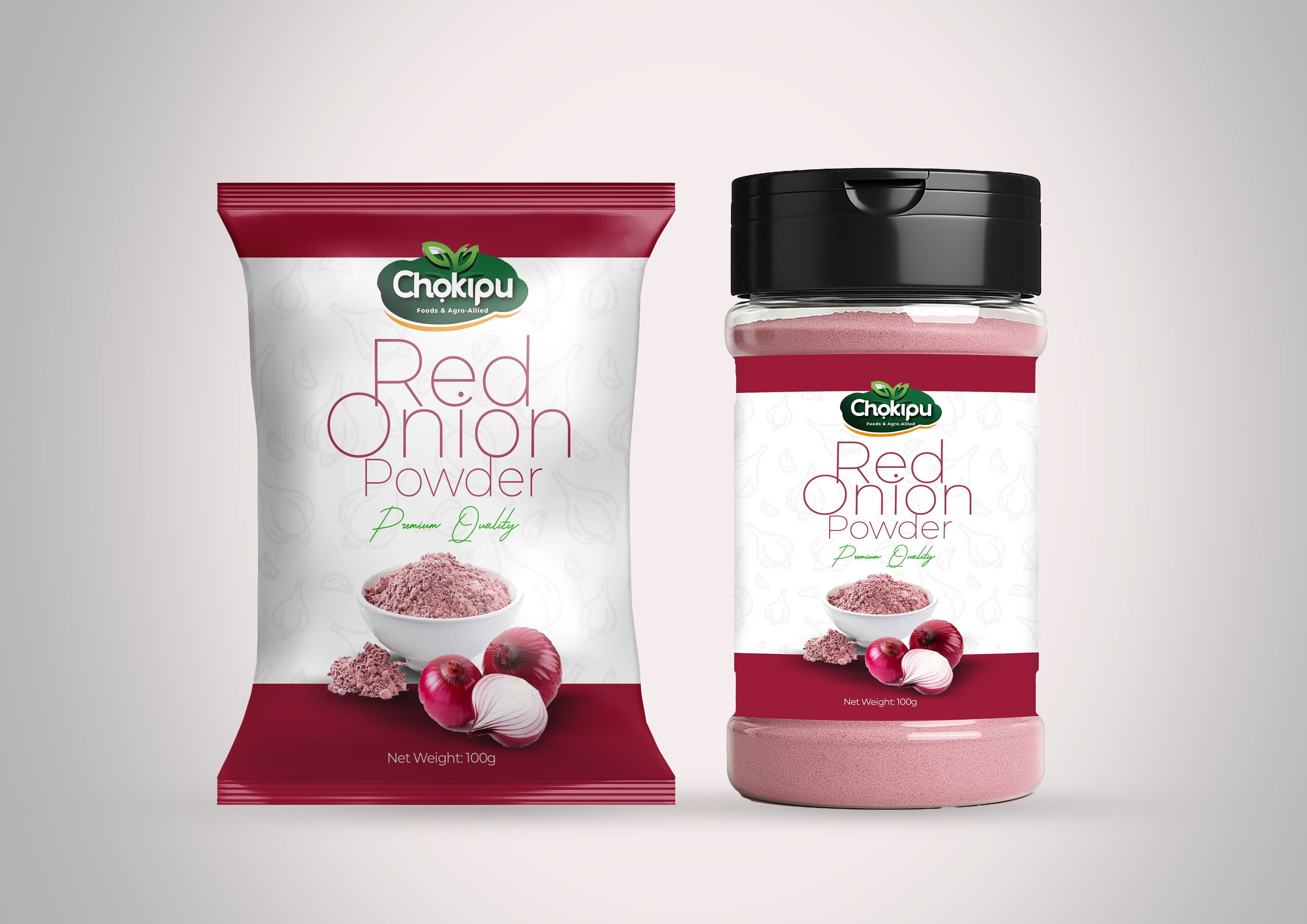
Red onion powder is made from ground red onions (Allium cepa). It has a dusty-pink colour, a smooth texture, and a tangy, sweet, earthy flavour.
Onion powder in general can be used in place of fresh onions. Red onion powder in particular is good for salads, soups, stews, sauces, condiments (e.g., spice blends, dressings, dips, etc.), snacks (e.g., popcorn), frying batter mixes, and baking.
Onion powder of all types are nutrient-dense, meaning they are high in nutrients, but relatively low in calories. Red onion powder is especially rich in antioxidants like, quercetin and anthocyanin, and provides a good source of fiber and micronutrients including, vitamin C, vitamin B6, folate, magnesium, calcium, potassium, and phosphorus.
Agro-Allied Products
We manufacture agro-allied products like, animal feed, organic-mineral fertilizers, and bio-ethanol from our food products.The mineral component of our fertilizers come from materials mined from naturally occurring nutrient deposits found in the earth, and from the fixation of nitrogen from the atmosphere.
To support local content initiatives, the components of our agro-allied products are wholly sourced from Nigeria.
Animal Feed

Our animal feedstuff are derived from our food products. They are a digestible source of nutrients and energy and can be fed to ruminants, pigs, poultry, rabbits, horses, and, aquaculture.
Organic-Mineral Fertilizers

We focus on developing crop- and site-specific fertilizer blends that optimize crop yield and soil productivity. Our fertilizers are developed using natural components from plant-based agro-industrial wastes, enriched with mineral materials.
Our fertilizer blends work faster than fully organic fertilizers and the organic content increases the formation of humus in the soil. Our solid (granular), plant-based organic and minerally-upgraded high quality fertilizers provide extended-release nutrition, requiring less applications.
Bio-Ethanol
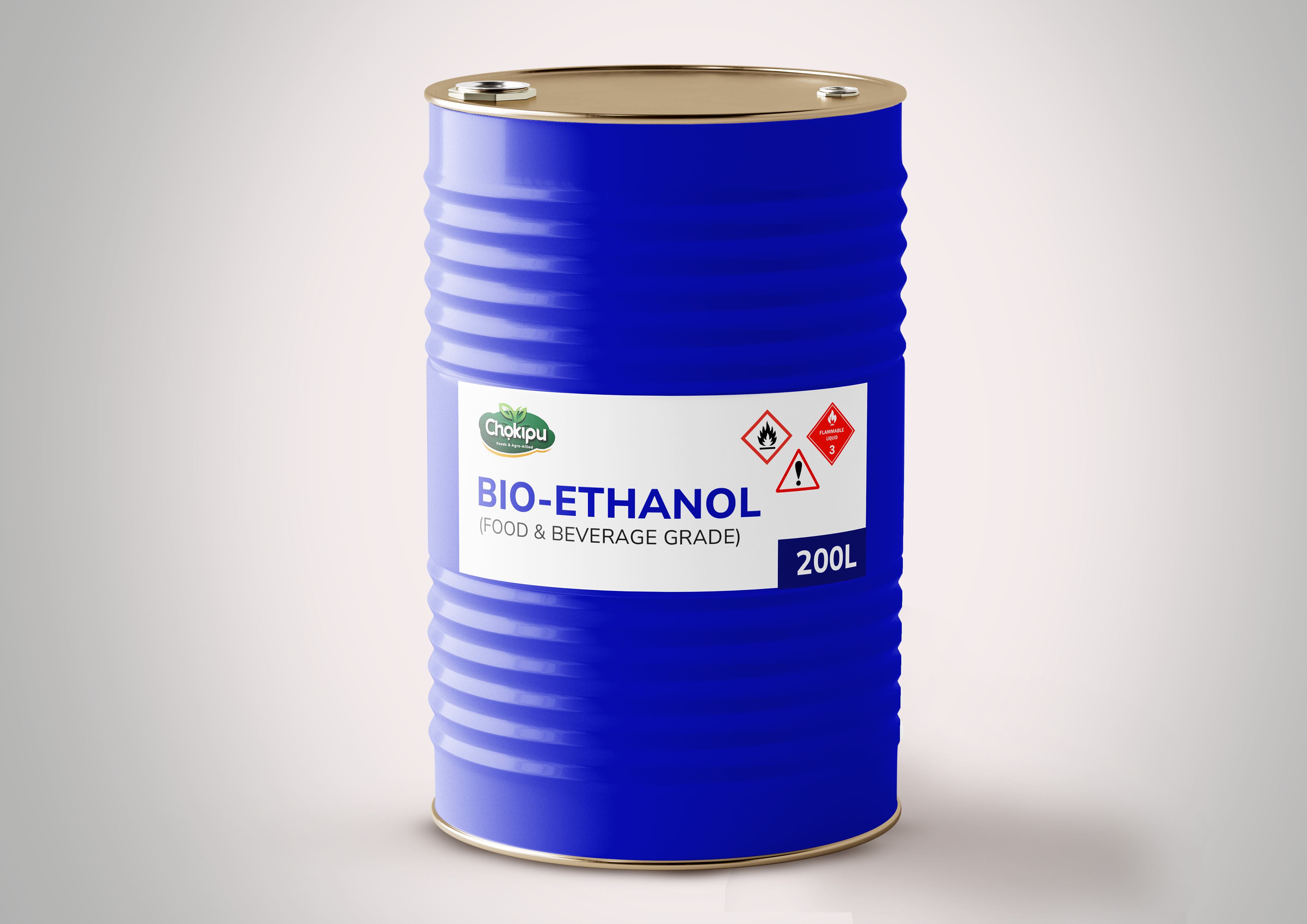
We produce second generation bio-ethanol from plant-based agricultural waste. Specifically, we utilize plant waste of energy crops left after harvesting that have no appreciable value to industry or competitive use as food as a cost-effective feedstock to produce bio-ethanol. We utilize an Extractive Distillation System that optimizes process efficiency, with the objective to reduce energy consumption during bio-ethanol production process.
Bio-ethanol is used for many applications across a variety of industries. It has medical applications as a general anesthetic, antiseptic, disinfectant, medicinal solvent, and antidote. It has recreational applications as a central nervous system depressant. It has cosmetics and beauty applications as an astringent, preservative, spray hold, antibacterial/antifungal, and general solvent. It has applications as a food additive to preserve, improve colouring, and enhance flavour. Bio-ethanol is also utilized as an industrial solvent and fuel source, that could be used as an alternative to petrol, or in a blend with petrol to reduce the amount of petroleum consumed and produce cleaner combustion. Bio-ethanol has the same uses as the fuels used to produce value-added chemicals and generate other forms of energy, including, heat and electricity.
Our bio-ethanol is food- and beverage-grade with 95% content and meets the purity standards on the food chemical codex monograph published by the National Academy of Sciences.